

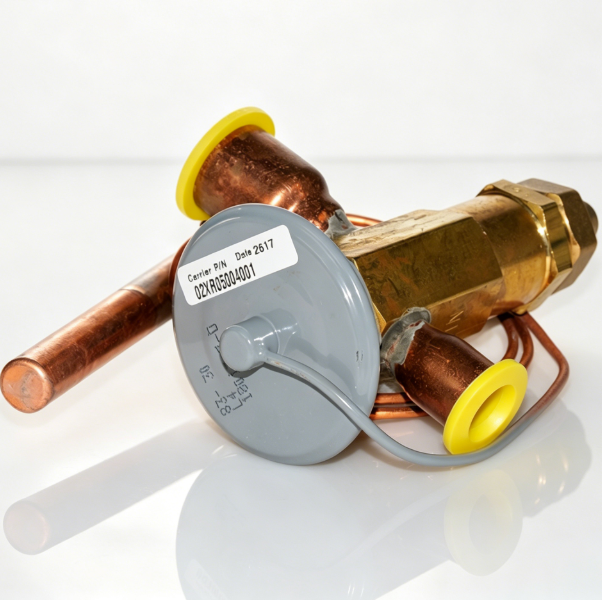
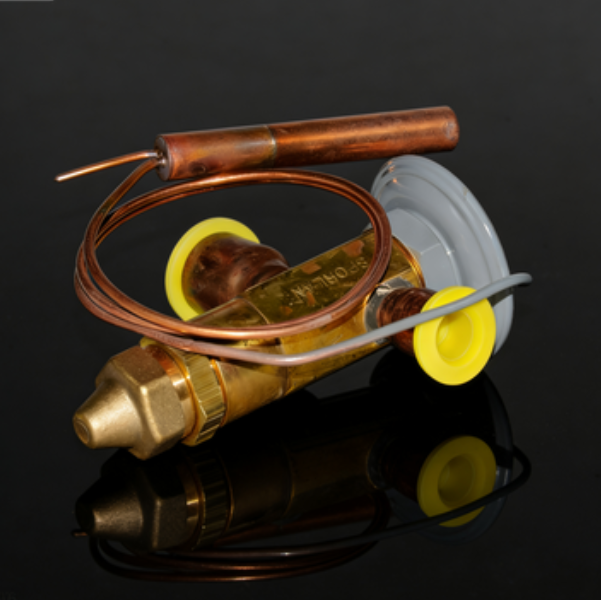
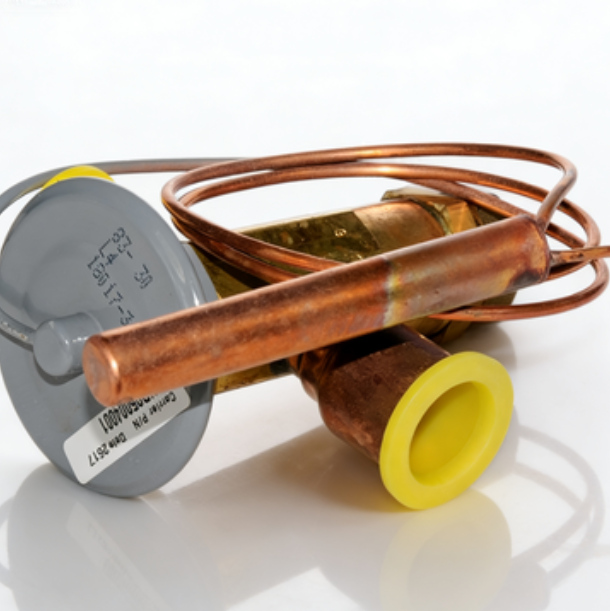
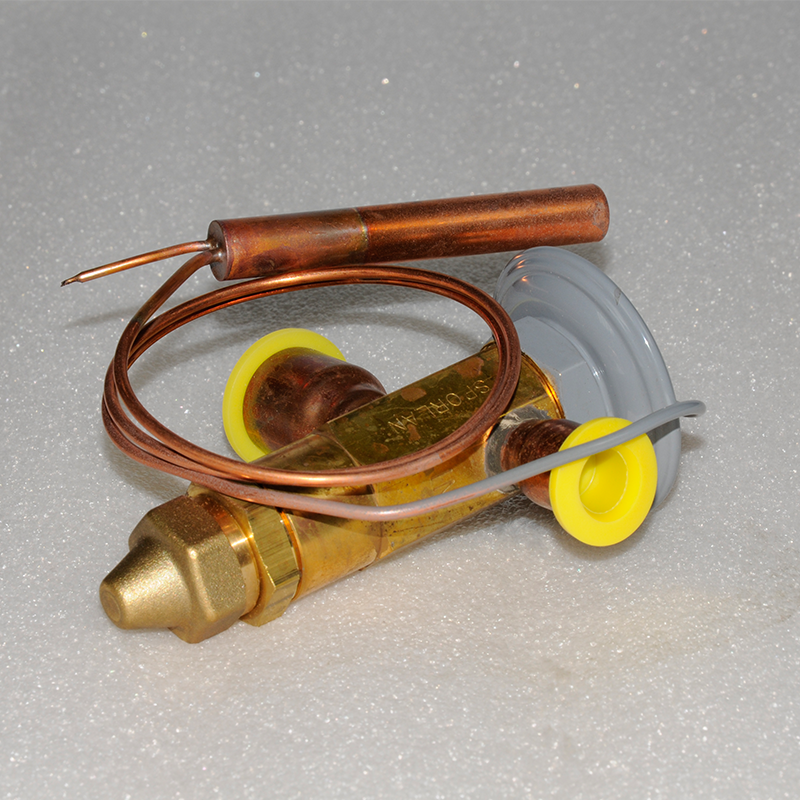
Products Description
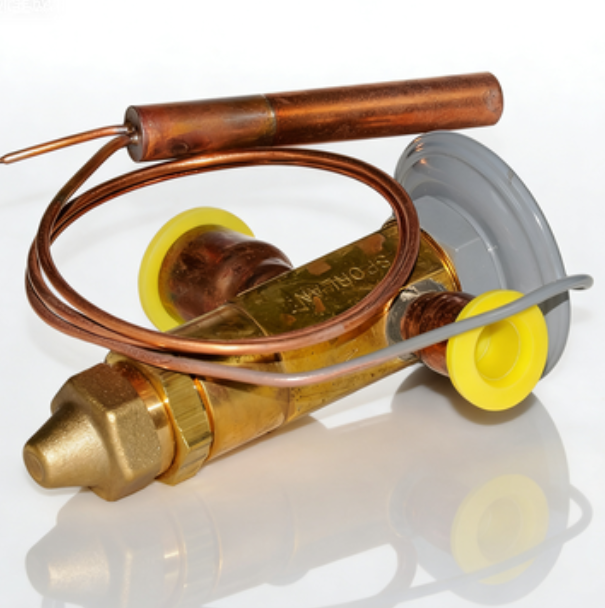
| Product Name | Carrier 02XR05004001 Expansion Valve |
| Model | 02XR05004001 |
| Applicable Industries | Industry and Manufacturing; Transportation |
| Application | Refrigeration compressor |
| Packaging | Cardboard Box |
| MOQ | 1 Piece |
Functions and Roles of the Carrier 02XR05004001 Expansion Valve
1. Precise Throttling and Pressure Reduction
It precisely throttles and reduces the pressure of high-pressure liquid refrigerant—received from the condenser—into low-pressure, low-temperature wet vapor. By creating the necessary conditions for heat absorption through evaporation within the evaporator, it serves as the “energy regulating valve” of the refrigeration cycle.
2. Intelligent Flow Control (Based on Superheat)
An integrated thermal sensing bulb continuously monitors the superheat at the evaporator outlet, automatically adjusting the valve opening: it opens wider when the load increases and closes down when the load decreases. This ensures optimal heat exchange within the evaporator while preventing liquid slugging or overheating of the compressor.
3. System Stability and Protection
Working in conjunction with the unit’s control logic, it maintains a balance between high and low pressures, thereby preventing system surging or overloading. It facilitates smooth transitions during startup, shutdown, or sudden changes in operating conditions, effectively protecting both the compressor and the heat exchangers.
4. Enhanced Energy Efficiency and Conservation
By dynamically matching the unit’s operational load, it optimizes the refrigerant circulation rate. This reduces compressor energy consumption, improves the unit’s Coefficient of Performance (COP), and ultimately achieves energy-efficient operation.
Tags: chiller expansion valve chiller flow regulator chiller maintenance part chiller refrigerant valve chiller service part chiller spare part compressor expansion valve flow control valve hvac expansion valve hvac replacement component hvac system valve Industrial Chiller Part industrial refrigeration component refrigerant control valve refrigeration control valve refrigeration equipment part refrigeration expansion valve refrigeration system valve thermal expansion valve thermostatic expansion valve
Technical parameter

Company Profile
Technical parameter
| Q1:For refrigeration industry, which brands are your products covering? | A1:We produce filter element replacements for brands like,Bitzer, Carrier, York, McQuay, Trane, etc… |
| Q2:Does the price include freight? | A2:The quotation is usually the factory price. We can recommend the most economical logistics plan and calculate the freight according to your destination and quantity. |
| Q3:How to ensure product quality? | A3:We have a strict quality control process, and we will carry out multiple inspections before the products leave the factory to ensure that they meet the standards. |
| Q4:Why choose us? | A4:Product reliability: We are a professional manufacturer . can offer high-quality products at the most competitive prices. Technical support: We provide technical assistance. Industry experience: We have over 10 years of experience in the refrigeration equipment service field. After-sales service: We offer professional after-sales service. Team collaboration: We have a professional team that can provide you with prompt services and delivery schedules. |
Product Replacement, Maintenance Recommendations, and Precautions
1. Replacement Scenarios: Insufficient unit cooling capacity; evaporator frosting/lack of frosting; frequent compressor overheating alarms or liquid slugging; valve sticking; control failure.
2. Maintenance Recommendations:
Every 6–12 months, inspect the mounting and insulation of the thermal sensing bulb, as well as the tightness of connection seals.
Before replacement, recover the refrigerant and relieve system pressure to prevent high-pressure discharge.
After replacement, perform superheat adjustment (typically, 5–8°C is considered the standard range).
3. Precautions:
Strictly prohibit connecting high-voltage power to the valve body’s control terminals (this valve is thermally actuated and requires no external power supply).
Avoid subjecting the valve body to severe vibration to prevent damage to its internal mechanisms.
After installation, perform a pressure-holding test (using nitrogen at 1.5 MPa; hold for 24 hours with no pressure drop).